
Parking spots can steer Toronto condo prices higher
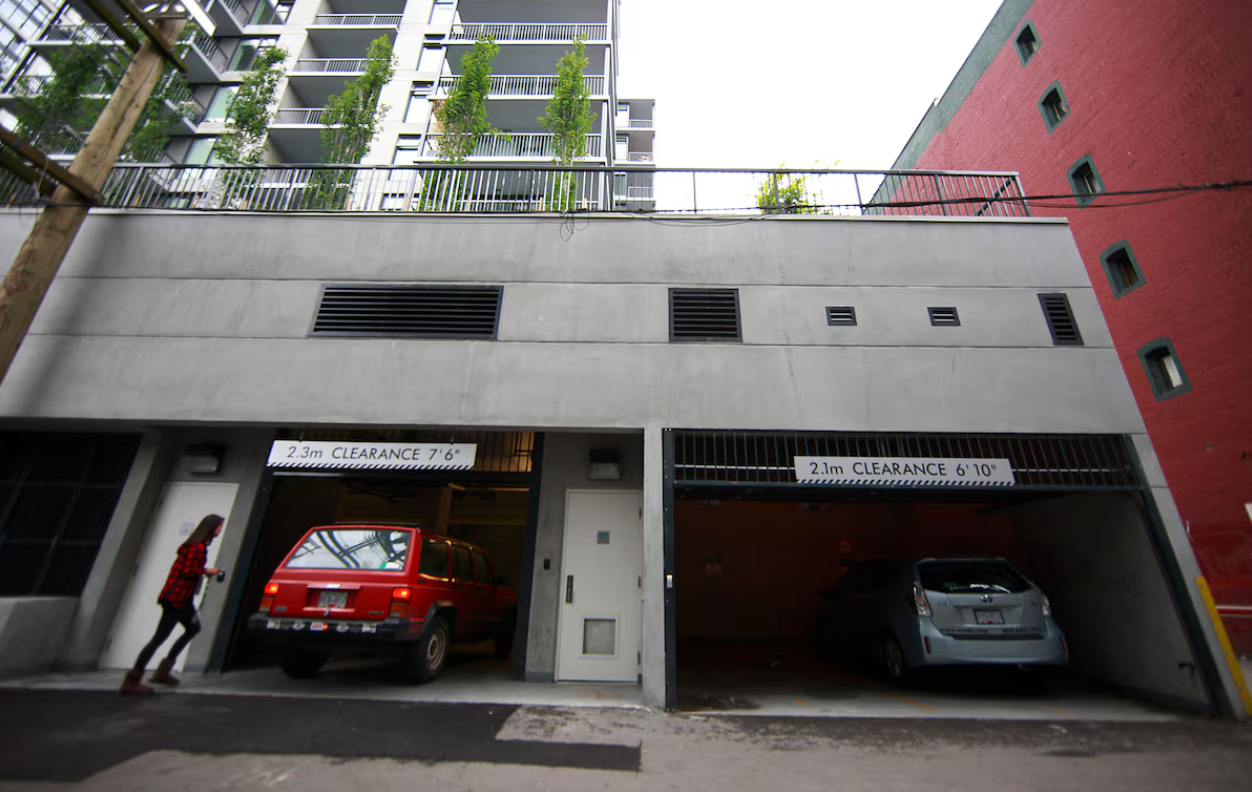
As Toronto condominium prices and sales stay depressed, a new report suggests that, in the right neighbourhood, a parking spot can make all the difference.
Data collected by the digital real estate platform and brokerage Wahi.com suggests there are places in the Toronto region where having a parking spot attached to a condo can make it more valuable, and even help you sell it faster.
Wahi economist Ryan McLaughlin pulled 2025 Toronto-area real estate sales data for one-bedroom apartments from Information Technology Systems Ontario and the Toronto Regional Real Estate Board, and found that Riverdale (a neighbourhood near the waterfront and along the Don Valley) had the largest price premium for condos with parking at $268,000.
Out of the remaining top 12 neighbourhoods with a premium for parking on Wahi’s list, the average extra cost was $126,000. On average, condos with parking spots sold 1.24 days quicker than those without across all 13 areas, but in several hot spots the difference was more dramatic, with seven to 18 less days on the market.
On one level, it’s a simple supply and demand story, according to Mr. McLaughlin, who notes that Toronto condo buildings have been incorporating fewer parking spaces in recent decades, thus raising the cost of an increasingly scarce commodity. “[For] anything built since 2022, [parking] was much more at the discretion of the developer,” he said.
The resale picture is largely supported by data from new condo buildings currently under construction or registration, according to Pauline Lierman, vice-president of market research with Zonda Urban. Comparing 165 projects active at the end of 2025, she found a relationship between parking and price. In Toronto, the average condo unit size is 643 square feet, and the average cost to buy a new parking spot is $93,892. But only about half of the condo buyers also purchased parking.
In Oakville, west of downtown Toronto, average condo unit sizes are among the largest in the region at 733 square feet, but the cost of buying a parking spot was among the lowest at $48,510. The average Oakville condo resident had 1.34 parking spots (meaning most have a parking spot, and quite a few have more than one).
Midtown Toronto has both the largest average unit size at 812 square feet, and the highest parking cost at $137,574. But Ms. Lierman notes that in the luxury market, buyers often expect a parking spot as part of the purchase price, and any extra parking costs are frequently for second or third spots.
Realtor Christopher Bibby also points to a reality of new construction sales as parking spot to apartment ratios fell: buyers of smaller, cheaper apartments weren’t even allowed to buy a spot. “A lot of the time, all the units under 750 square feet don’t qualify for parking,” he said. “You had a new one-plus-den, and you weren’t eligible to buy a parking spot.”
Wahi’s data also showed the price disparity is growing in some areas: Riverdale’s parking premium jumped 32 per cent from 2024’s sales data, Corktown went up 13 per cent and the Annex and Entertainment District jumped 10 per cent.
The Toronto condo market is in the midst of a steep decline. According to TRREB data, the average price of a Toronto condo was $820,835 in April, 2022. But as of February, 2026, the average price was $663,984, 19-per-cent lower, and there were half as many sales (733, down from 1,488).
Mr. McLaughlin acknowledges there are some issues with Wahi’s methodology: its data doesn’t control for square footage, which can create fairly dramatic disparities in small sample sizes. Riverdale had the largest price premium, but the company only found 21 one-bedroom apartments that sold, 12 with parking, nine without. When digging into the transactions in the neighbourhood, significant price gaps can be seen between a one-bedroom that’s 800 square feet with parking and a one-bedroom that’s under 500 square feet without parking.
For example, in November, 2025, a one-bedroom apartment under 500 square feet without parking at 150 Logan Ave. in Riverdale sold for $461,800, almost $37,000 under its asking price. Meanwhile, at 68 Broadview Ave. an 800-square-foot, one-bedroom apartment with parking sold for $735,000 in May, 2025. That is almost a $300,000 difference. A similar apartment in the same Broadview building, minus a parking spot, sold for $680,000 in June, 2025, suggesting that like-for-like, the parking premium was more like $55,000.
A more realistic sense of the premium for parking can be found in the Entertainment District, where Wahi tracked 264 apartments without parking that sold for an average price of $525,000 in 2025, and 125 with parking sold at the same time for an average price of $649,000, meaning a premium of $124,000 for a parking spot in the busy area.
Categories

Need advice from
Christopher Bibby
for your
property?